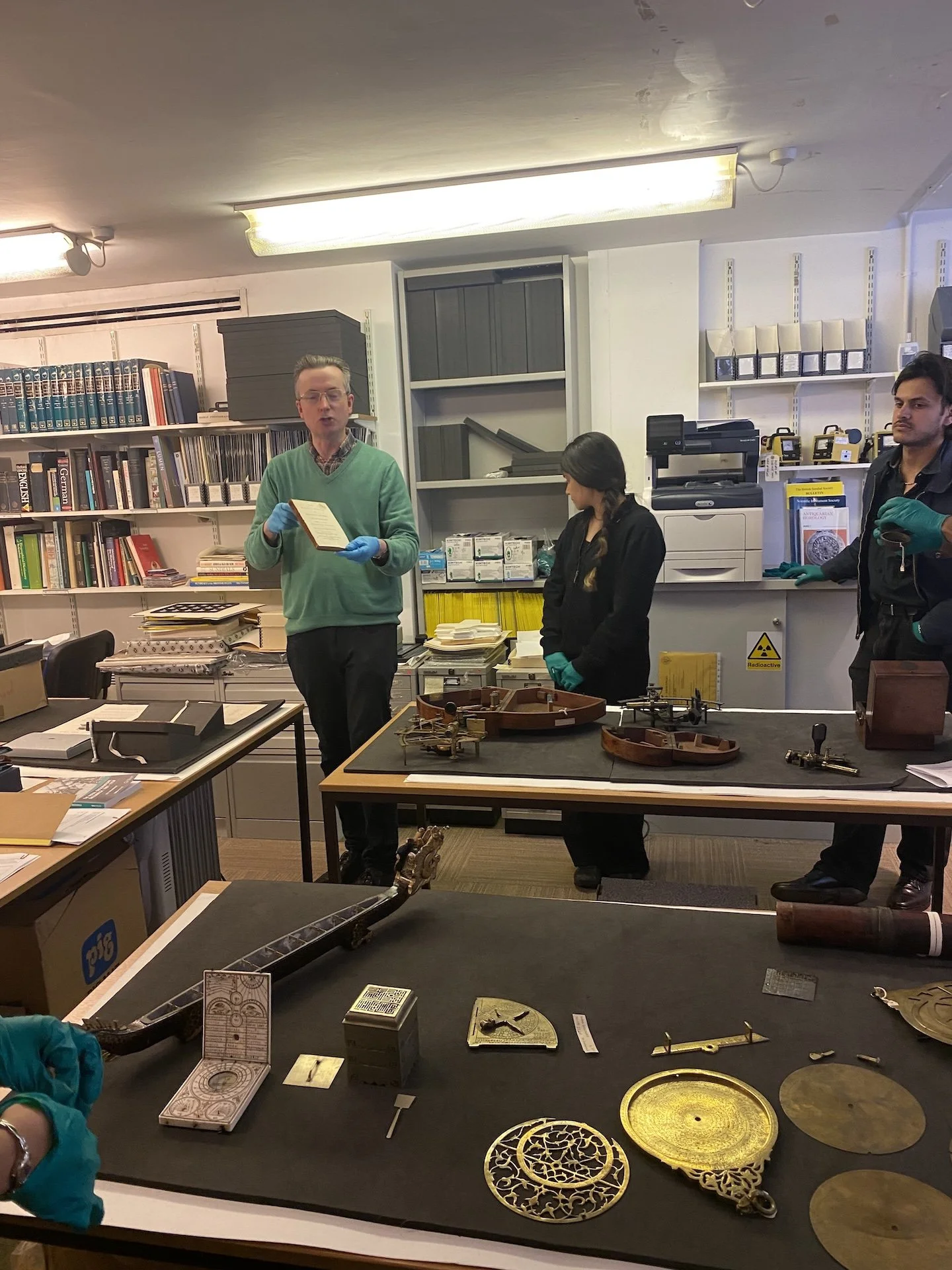
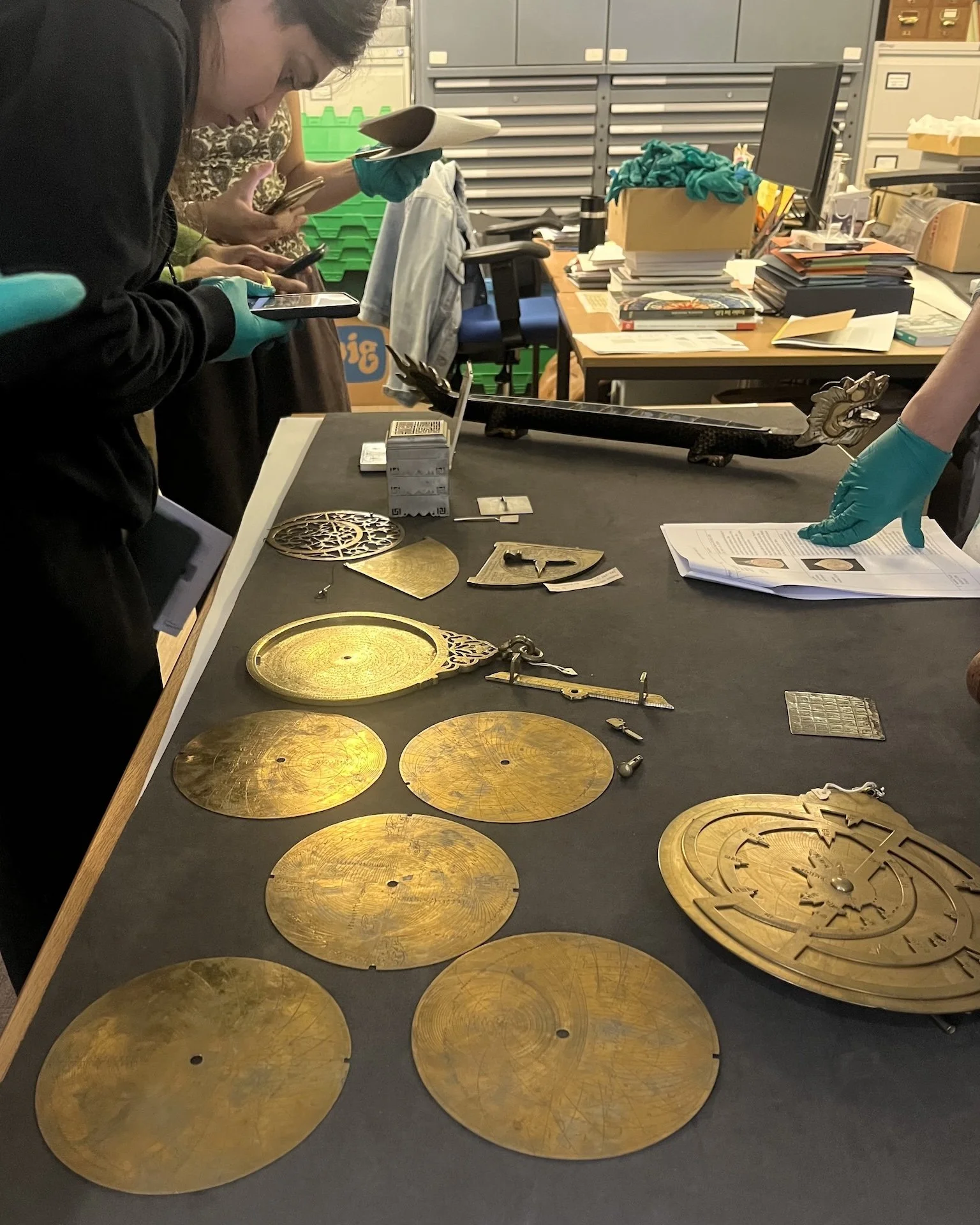
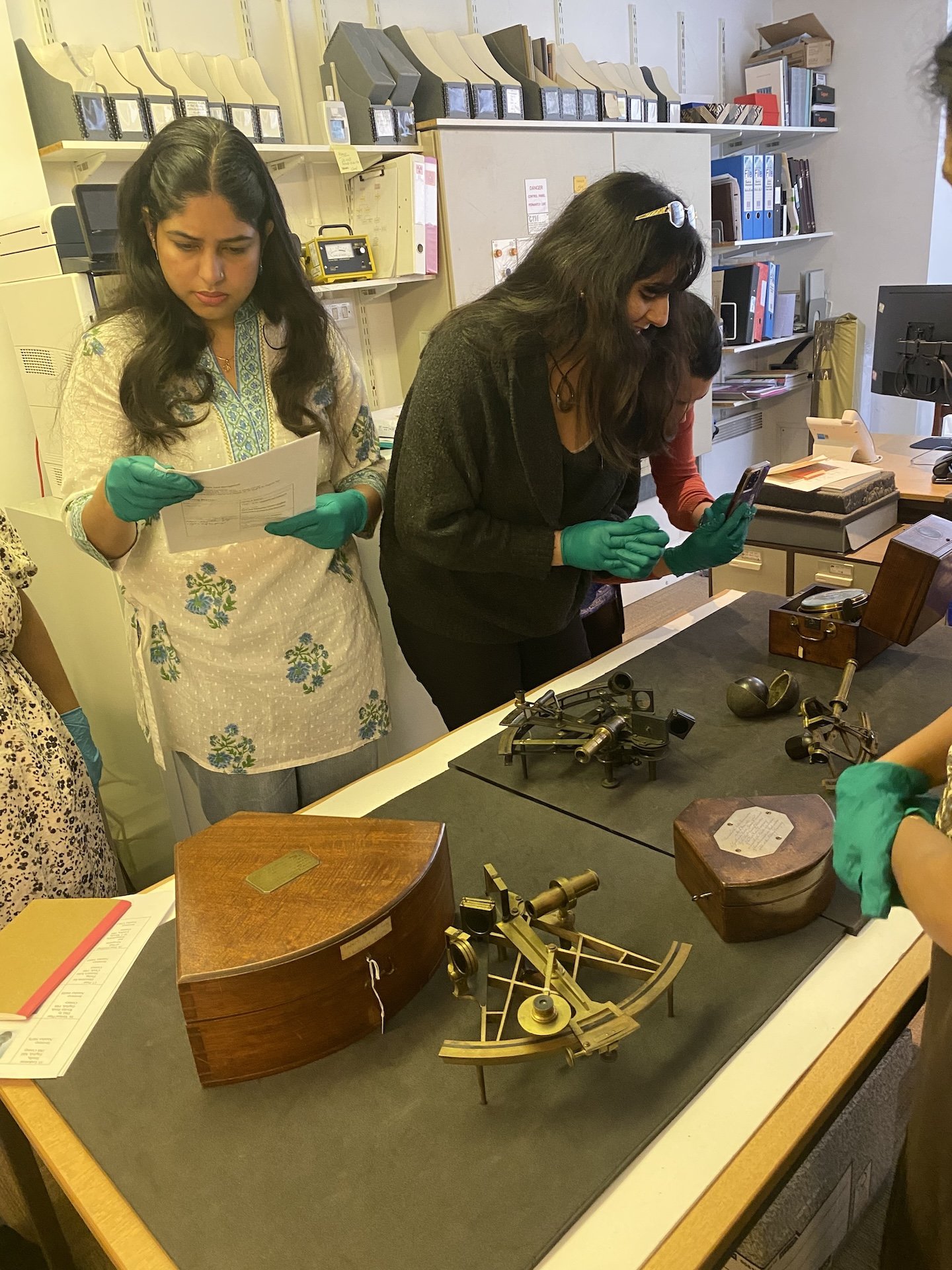
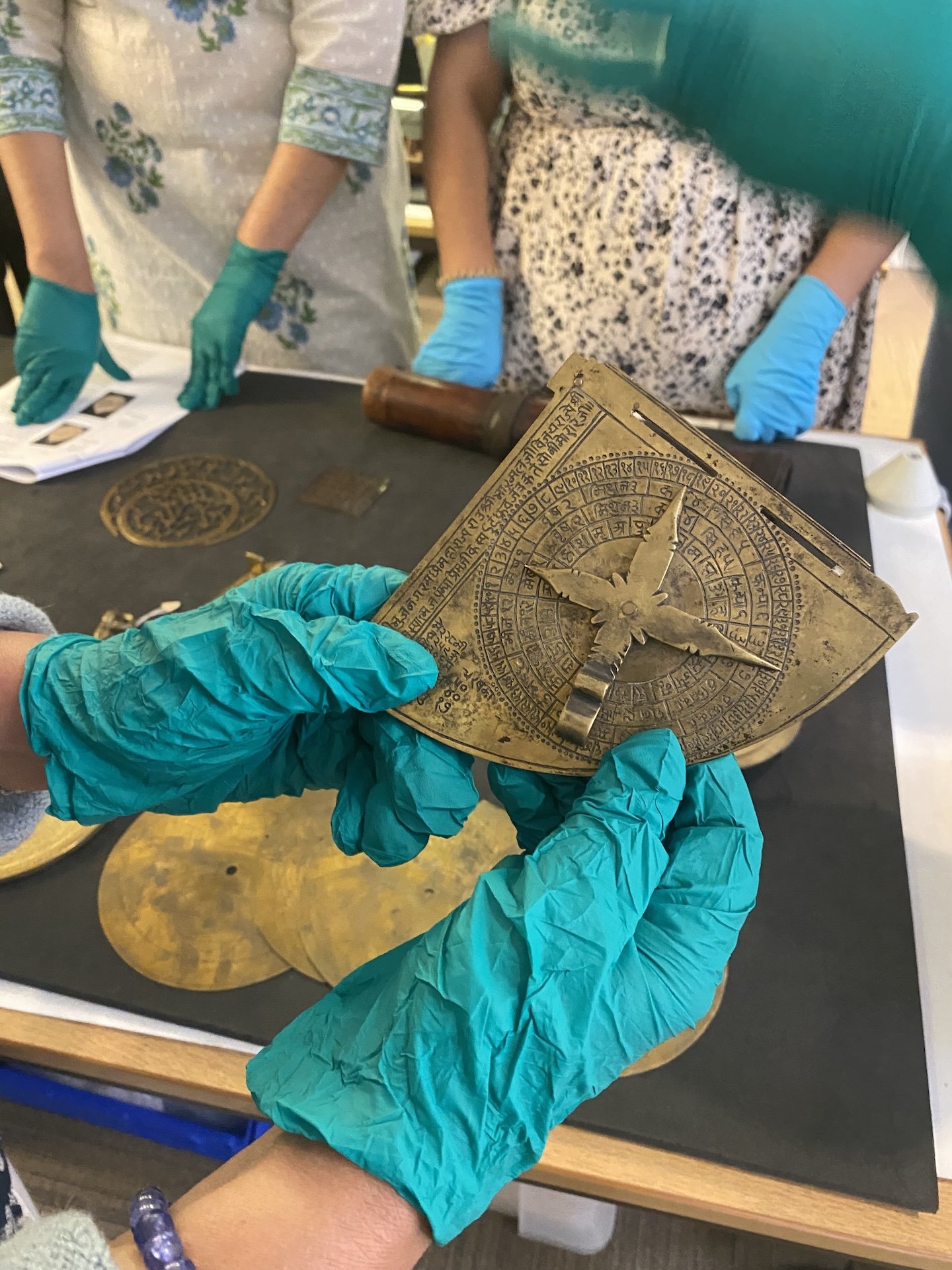
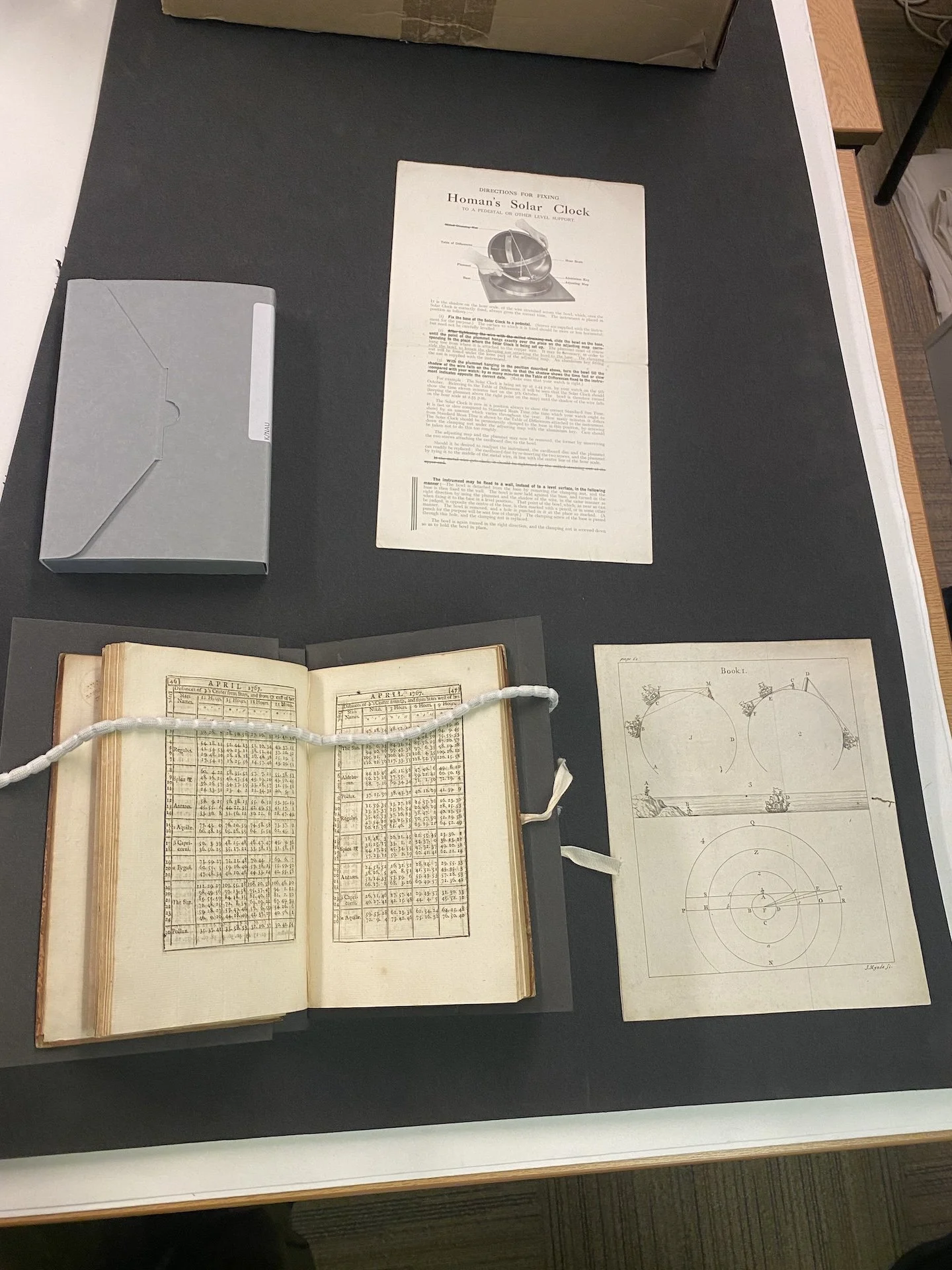
Our Third Community workshop on the theme of ‘Time and Navigation’ was held on June 12, 2026 at the History of Science Museum. Community participant researchers handled museum objects connected with timekeeping and navigation across various cultures, places, and time-periods, from early modern astrolabes to modern sundials and sextants, including those connected to the East India Company and the Royal Navy in the 1800s.
The objects invited questions of the changing conception of time, as timekeeping devices were transformed for purposes of navigation by merchants and imperial powers, and for production in industry. Participants observed how plural conceptions of time and time-keeping embodied in these objects challenged the identification of the ‘modern’ with secular clock-time, and the need for a more heterogeneous understanding of measuring time and temporality. This understanding would include incense sticks, hoary quadrants, sun dials, and oil lamps alongside newer sophisticated astronomical instruments.
The workshop also included a presentation by our Librarian and Archivist, Dr. Lee T. MacDonald, on the history of navigation and time-keeping in the modern era drawn from his research on the Royal Observatory at Greenwich. Lee’s talk also included the fascinating story of daily photographs of sunspots taken at observatories across the British Empire, including the Dehradun station (run by the Great Trigonometric Survey) and Kodaikanal. You can read more about Lee’s work on the Royal Observatory at Greenwich in his Open Access book here.